This is one post of a multi-part series covering our Two weeks Tokyo & Hokkaido Travel Guide:
▫
Singapore Airlines Suites Class from Singapore to Tokyo
▫
Three Days in Tokyo: Off the Beaten Path
▫
Sapporo, Otaru and Cape Kamui: Scenic Self-Drive Guide
▫
Furano, Biei, Sounkyou and Asahikawa: Amazing Autumn Colours
▫
Jozankei, Noboribetsu and Hakodate: Unparalleled Beauty
▫
Scoot's ScootBiz Class from Tokyo to Singapore
Hokkaido is as much a foodie destination as it is a sightseeing one. Japan's northern-most island is legendary for the variety and quality of
seafood fished up from the surrounding icy cold waters of the Pacific Ocean and the Seas of Japan and Okhotsk.
It's not just the seafood, though, that's such a big attraction; Hokkaido's
milk, dairy, fruits and other agricultural produce farmed from hundreds of thousands of hectares of pristine, unpolluted farm land is supplied to the rest of Japan. The percentages are staggering: 50% of all milk and 90% of all cheese consumed in Japan comes from Hokkaido!
This abundance of fresh, high-quality ingredients naturally translates to an abundance of restaurants and other eateries; each putting its own spin on the art of cooking up delicious, amazing food. We've put together a list of nine different foods that you really
must try if you're visiting. Let's begin!
1.
Genghis Khan or
Jingisukan (ジンギスカン)
➡ Lamb and Mutton charcoal-grilled on a cast iron dome
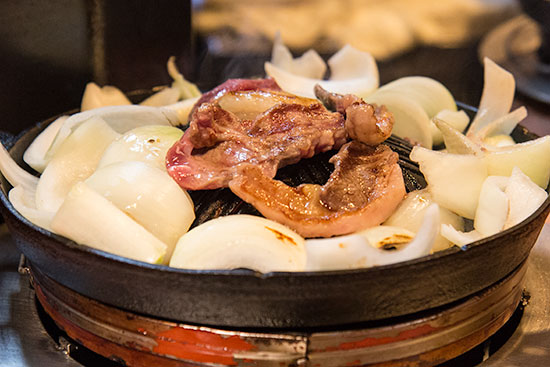
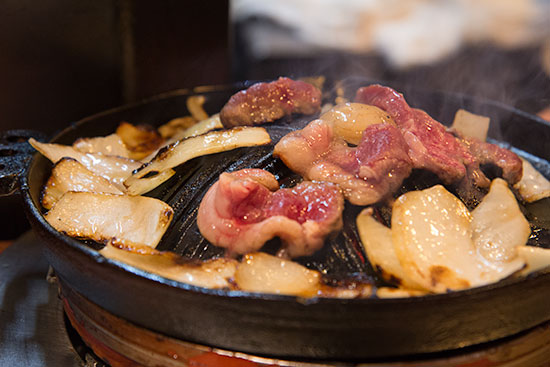 It's pretty amusing
 that this Hokkaido specialty is named after a
person. Legend has it that the cast iron dome used to cook the meat looks like the helmets of Mongolian soldiers, hence
Jingisukan. Get it? No, we don't quite get it either. There are dozens of places around
Sapporo that serve up this delicacy, including the
Sapporo Beer Garden, but we head to a smaller, more specialized shop:
Daruma Honten (だるま本店)

Like many Japanese eateries it's
tiny, with circular seating for just a dozen (or so) diners. We recommend coming not much later than the 5:00pm dinner opening time otherwise there's likely to be a long queue. Once you've taken your seats, with the charcoal restocked under your semi-personal cast iron helmet, onions at the ready and a mighty knob of melting lamb fat up top greasing the pan, it's time to eat! Ordering is a breeze: Just say ご飯 ('gohan') if you want some rice, ビール ('bi-ru') when your mug is empty, 肉 ('niku') when you're out of raw mutton, and drink and eat to your heart's content!

Once your meat's done, give it a quick dip in the provided soy-based dipping sauce, and eat. It's an amazing experience; the ventilation system does a champion job of keeping the small room relatively smoke-free. Note that smoke-free doesn't mean odor-free: as you can probably imagine, your hair and clothes will most definitely smell like charcoal-grilled meat for hours.

Once you're done, a quick ごちそうさまでした ('gochisou sama deshita') will prompt the servers to bring you the cheque. Prices depend on how many bowls of mutton and mugs of beer you ordered, of course, but ¥2,500 is a good estimate for a person of average appetite (and thirst). Pay, leave the restaurant and try to hide your utter satisfaction from the two dozen poor sods queue'ing outside in the cold.
2.
Butter Corn Ramen (バターコーンらーめん)
➡ Soupy Noodles with corn and a knob of butter
 For some reason
 we had the idea that when Hokkaido's populace eats noodle soup, they only eat
miso ramen with corn and butter. I'm not sure where we got that stereotype from, but in reality the ramen shops serve up all sorts of broths - shio (salt), shoyu (soy sauce), tonkotsu (pork bone) and of course, miso (soy bean paste).
If you're in Sapporo, the secluded
Ramen Alley, tucked away in a small alley in the entertainment and nightlife district of
Susukino is your best bet. There are over a dozen different stalls, many of which are staffed with just one or two people, all of which serve up differing interpretations of the beloved noodle soup. We've got no idea which of the stalls is the best; suffice to say our instinctual choice - Butter Corn Seafood Miso Ramen at
Teshigaka Ramen (弟子屈ラーメン) was delicious (if a little oily), and should satisfy all but the most fussy of ramen eaters.

Up North, in Hokkaido's second largest city, the
Asahikawa Ramen Village brings together eight of the most well known ramen shops in one convenient location. We face a similar quandary of having too many choices; if like us you're only visiting once, it really does boil down to what you
feel is the most attractive shop.
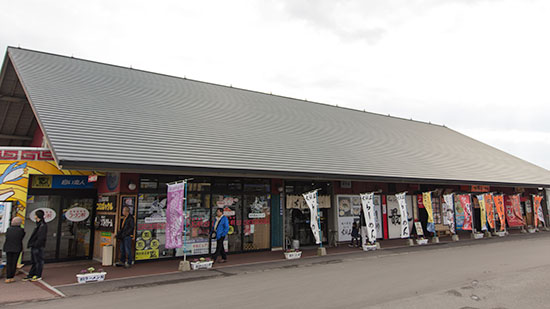
For us, our feelings lead us to
Saijo Ramen (最上ラーメン), to try their rather unique
Ukokkei Ramen (烏骨鶏ラーメン). It's a clear,
Silkie Chicken based broth with ginger as a strong secondary flavour component, and actually tastes really good! It's a pretty refreshing bowl of soup and doesn't have that heaviness that pork-based broths sometimes have. Highly recommended.

As is generally the case in the rest of Japan, a bowl of Ramen doesn't fluctuate too far from the ¥1,000 price tag.
3.
Kaisen Don (海鮮丼)
➡ Assorted fresh, raw seafood on a bed of warm steamed rice
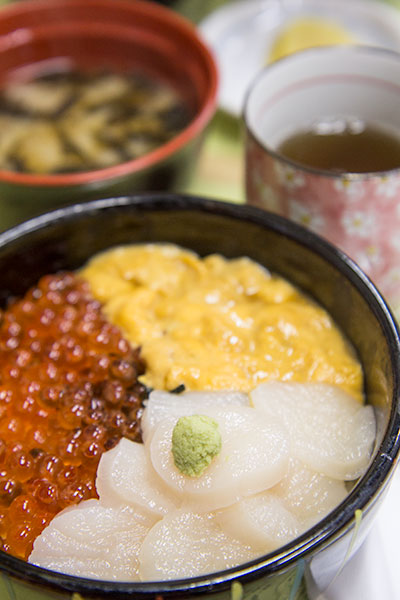 Finally, some seafood! Kaisen Don
 is a catch-all term to describe any sort of seafood on warm, un-vinegared rice, and is deliciously eaten as an early morning breakfast. Morning Markets are the best places to get your eat on; for example the
Curb Market in Sapporo. There are multiple shops littered around the market; just go wherever your instinct (or your nose) takes you.
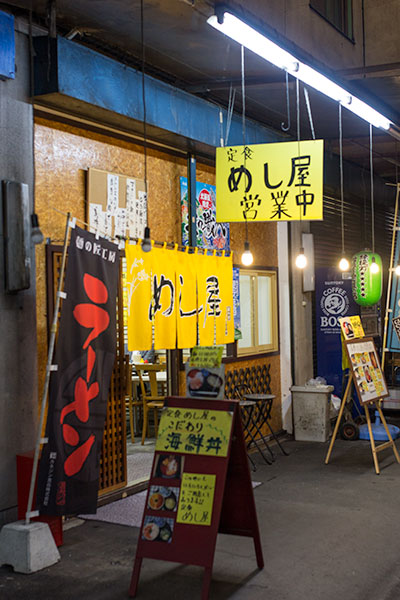
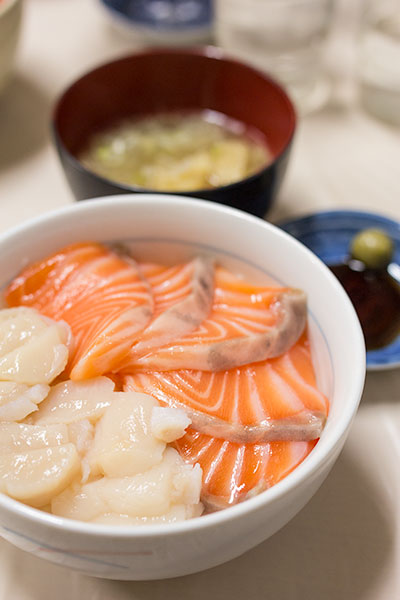
While there are some standard bowl names - 三色丼 ('sanshoku don' meaning three coloured rice bowl) for instance - essentially you can mix and match whatever seafood items you feel like having. We recommend that you at least try scallops and
ikura (salted salmon eggs) - we found that these two items were consistently superior eaten fresh in Hokkaido as compared to back home in Singapore.

You need to travel down South to the port city of
Hakodate to find the king of Morning Markets, though. This market is more famous, more busy and more well stocked than any of the others on the island. Naturally there are also more restaurants (which means a bigger headache in deciding which one to eat at); We decided on
Kikuyo Shokudo (きくよ食堂).

If you're up for something a little more adventurous, try out their ぶっかけ丼: A mish mash of salmon, squid, salmon eggs, avocado and raw quail's egg, which ends up with a somewhat unusual creamy, sticky texture but is still utterly delicious anyway.

Prices greatly depend on what type of seafood you order; but in general budget ¥1,500 all the way up to ¥4,000 per bowl.
4.
Uni Donburi (うに丼)
➡ This Sea Urchin kaisendon deserves a category of its own

Technically,
Uni-don is also a form of Kaisen-don; but we're giving it a category on its' own because of how utterly delicious this morsel from the sea is. Sea urchin is highly perishable, so it is almost always soaked in an alum-salt solution as a preservative so that it survives the journey to export destination. As a result, lower-quality uni, or uni that has been sitting in the fridge for a day can sometimes have a little metallic, hint of bitterness that ruins the taste.
No such problems at
Uni Murakami! All the sea urchin served here is fresh and preservative-free (the company's main business is actually uni packing and distribution), and is creamy, sweet, umami deliciousness.

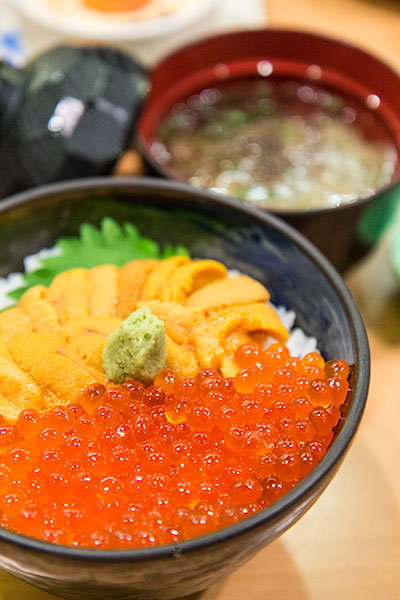
A half-and-half of Uni and Ikura is also actually pretty good; The salt from the salmon eggs complements the sweet uni, and the small 'pops' when each egg bursts open gives an additional textural dimension.
We also tried a couple of side dishes: The Uni Gratin wasn't too bad (more cream than uni though), but the BBQ'ed Uni (焼きうに) dried out the sea urchin and in our opinion ruined it.
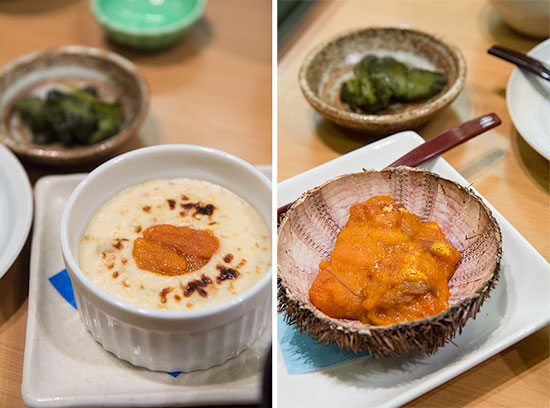
If you have Hakodate in your itinerary, you
must visit Uni Murakami to know just how heavenly really good sea urchin tastes like. Around ¥4,500 per person.
5.
Soup Curry (スープカレー)
➡ Soup + Curry = Soup Curry
 Do you like Soup?
Do you like Curry?
Then Sapporo
totally has your back with its
Soup Curry creation! It's exactly what it sounds: An interesting mixture of soup base and Japanese Curry, with your choice of meat.
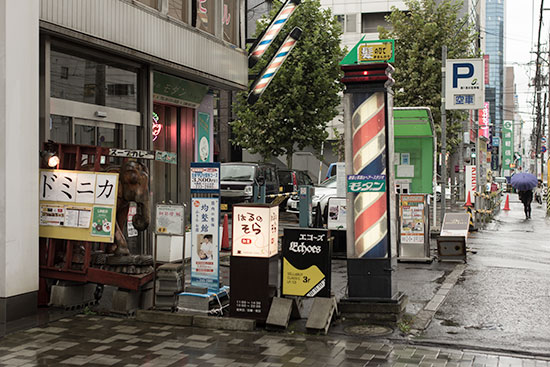
There are many shops around Sapporo serving up this concoction; We tried
Dominica's offering thanks to it's decently convenient location and quirky interior design.

Ordering is a four-choice process: Choose your soup base, choose your meat, then your rice size (weight) and finally spice level. If you're from an Asian country used to spicy food, you should easily be able to handle a spice level 4 or 5.
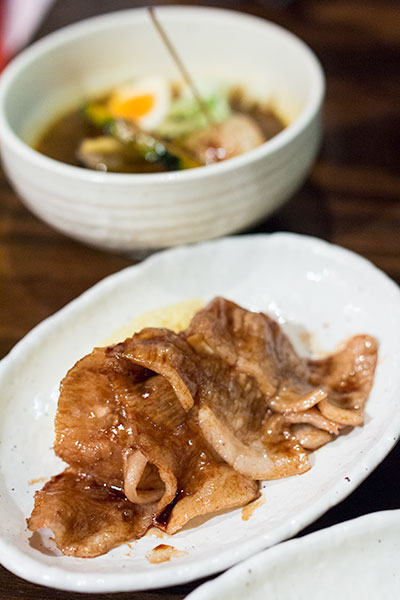
Soup Curry isn't too pricey - ¥1,000 per person or thereabouts inclusive of a bowl of basic salad.
6. In-room
Kaiseki (懐石)
➡ Traditional Japanese multi-course dinner served in the comfort of your room
 Kaiseki Ryori is a traditional Japanese
 multi-course dinner. The number and type of courses typically follow a very similar structure: For example there is normally an alcoholic aperitif like a plum wine, followed by appetizers and sashimi before moving on to steamed, hot pot, meat and other dishes. What
isn't constant is the menu, which is changed constantly to follow the availability of ingredients in the four different seasons of the year.

One thing you have to try, though, is having this Kaiseki Ryori meal served in your hotel room. This is typically offered by most of the better ryokans or onsen resorts; We had ours in
Dai-Ichi Takimotokan in Noboribetsu Onsen.

The food is cooked en-masse and served all at once (instead of one course at a time as you'd get in a proper restaurant) so quality does disappoint a little; but the experience of having this dinner while lounging in bath robes and in the comfort and privacy of your own room more than makes up for it.
7.
Crab Cuisine Dinner (かに料理)
➡ Snow Crab, Hairy Crab and King Crab deliciousness
 The waters around Hokkaido
 are home to three different crab species (in ascending order of price): ズワイガニ ('Zuwaigani' i.e. Snow Crab), 毛がに ('Kegani' i.e. Hairy Crab) and タラバ ('Taraba' i.e. King Crab). The best way to sample all three together is to visit a Crab specialty restaurant and have a crab cuisine dinner! We visited Sapporo's
Kani Honke for their
Hokkaido Hairy Crab Set Menu for two (¥13,200) - there were some hits and some misses, but overall it was an interesting induction into the world of Hokkaido crab.
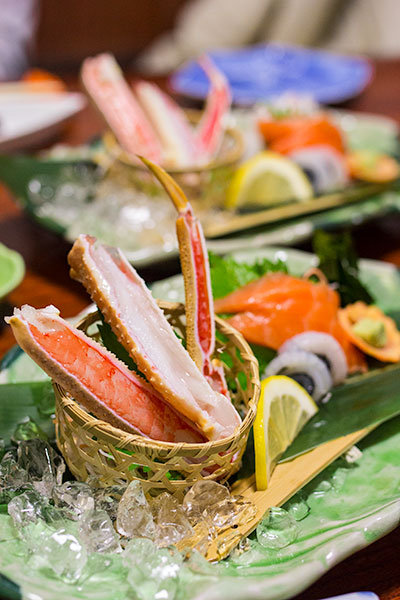
Do check out our
complete review of Kani Honke here.
8.
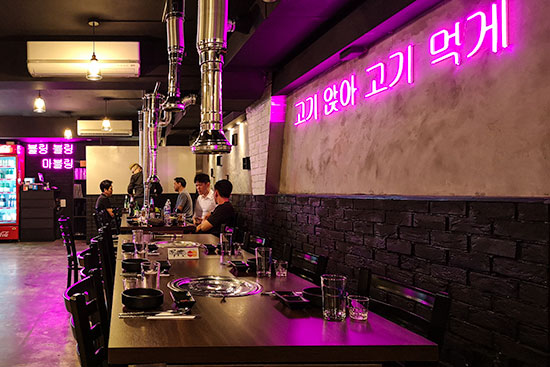
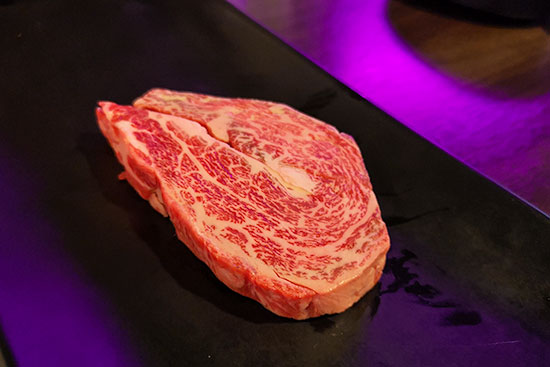
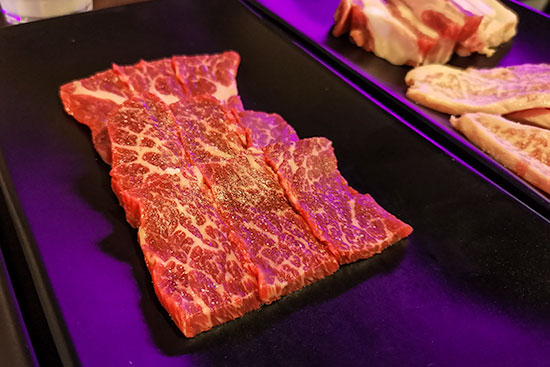
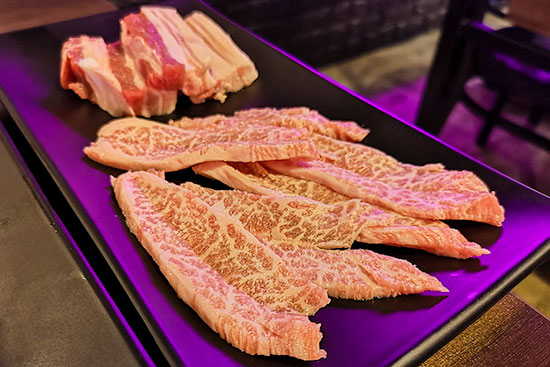
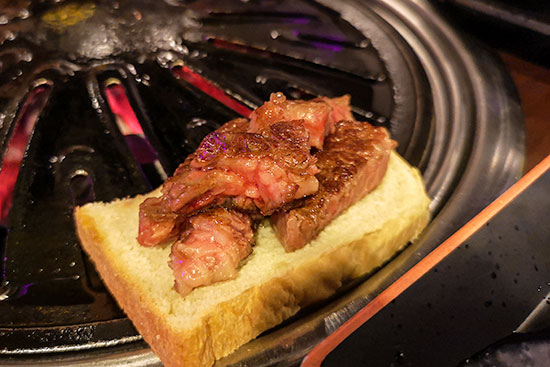
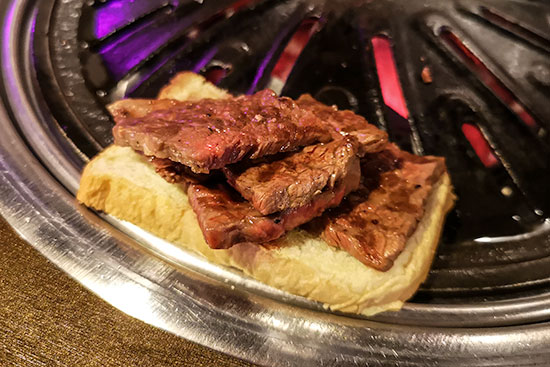
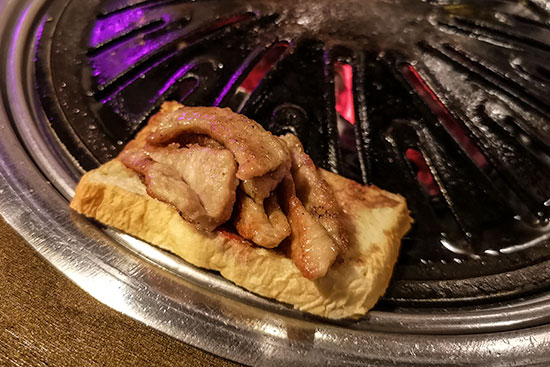
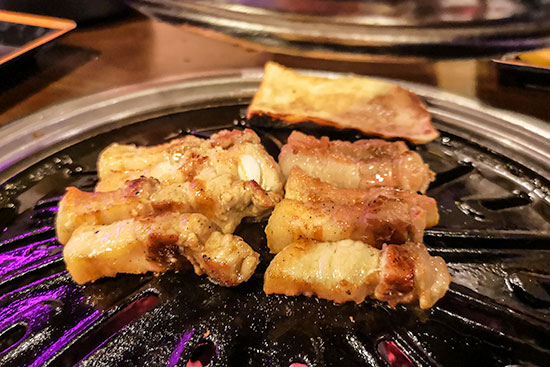
Yakiniku (焼肉)
➡ Assorted cuts of charcoal-grilled beef
 So technically Yakiniku isn't
 a Hokkaido specialty, but we decided we'd put it in anyway.
Gyu-Kaku is a huge yakiniku chain - with over 800 restaurants in Japan alone - including the outlet at
Otaru which we dined at.

The way Japanese eat Yakiniku is multiple small orders of different cuts of beef - some short rib, some tongue, some stomach and some intestines, for example - all grilled over smokeless binchō-tan charcoal, and washed down with suitable amounts of beer.


It's delicious, comfort food, and utterly perfect for dinner when it's cold, windy and rainy outside. Estimate ¥2,000 and up per person depending on your appetite and thirst!
If you've made it this far, thanks for reading, and we do sincerely hope you'll try every single food item we've listed in your up-coming trip to Hokkaido! The island really is a food-lovers paradise -- we're already looking at our bank accounts and trying to figure out how long it'll take to recover before it can fund our next Hokkaido trip. Bon appetit, and do feel free to leave us any questions or comments below!